


Coastal Zone Management Plan for the City of Kaštela (Coastal Plan)
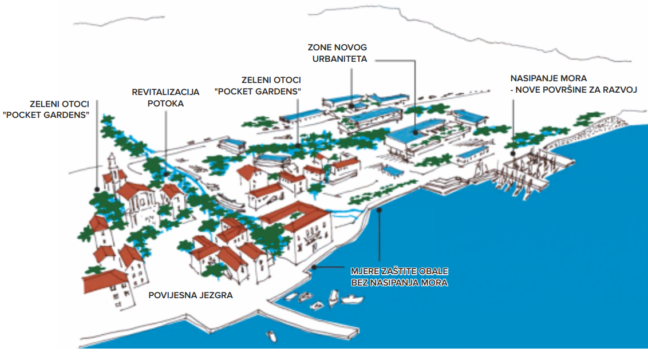
Geographical context and climate challenges The coastal plan covers the administrative area of the Town of Kaštela. The mainland makes up 58 km2, and the coastal part is sheltered by the Kaštela Bay. The length of the coastline is 23 km and almost all of the coast has become increasingly urban. The historical development of […]
Protection and restoration of Posidonia oceanica meadows
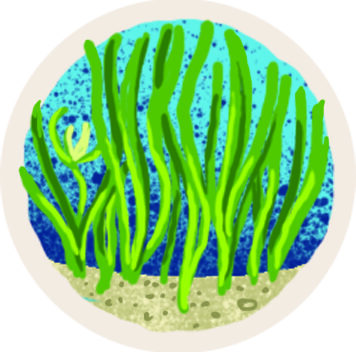
Description In the case of beach/coastal erosion, an important „defence role“ is played by seagrasses. Seagrasses entrap the sediment, stabilize the seafloor and thus, prevent erosion of the coasts. When seagrasses trap the sediment, the bottom gets shallower, and the waves break further away from the shoreline, resulting in less coastal erosion during storms. Seagrasses also slow […]
Integrating climate change adaptation processes at regional and local scales in Emilia-Romagna
Geographic context and climate challenges The Emilia-Romagna region is located in Northern Italy, and extends from the Apennines in the south to the Po River in the north and to the Adriatic Sea in the east. An average increase of yearly temperatures of about 1.5°C was recorded in the 1991-2016 period. Cumulative observed precipitation […]
Risk-based zoning and siting for aquaculture

DESCRIPTION Aquaculture is a key sector for the blue economy in the Adriatic-Ionian Region, with a significant potential for increasing development. In the European Union Strategy for the Adriatic and Ionian Region (EUSAIR) aquaculture is considered as one of the most promising activities of all coastal countries of the region. Despite this high potential, the […]
Diversification of fisheries and aquaculture products and systems

DESCRIPTION Marine ecosystems are already experiencing the redistribution of species and habitats due to the climate change and these changes are likely to be magnified in the future. Water warming and changes in terms of the primary production are found to directly influence nekton composition in the Northern Adriatic Sea, driving the decrease of species […]
Climate-related health action plans
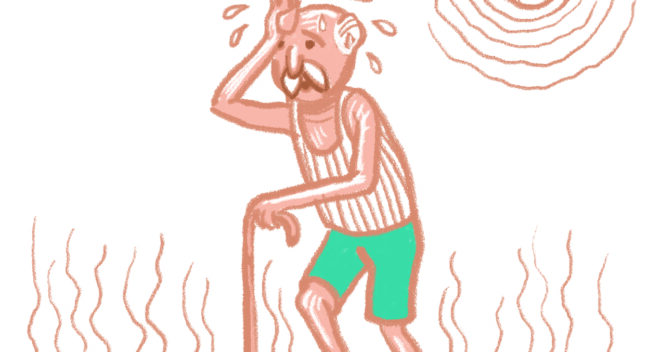
DESCRIPTION Evidence that climate change and especially extreme weather events cause impacts on human health is well documented. High temperature can lead to increased mortality and morbidity, with heat waves being a major concern in Europe, especially in southern and Mediterranean countries. In addition, mortality related to flooding is expected to increase, and change in […]
Škocjanski zatok – restored coastal wetland enhancing resilience of the city of Koper
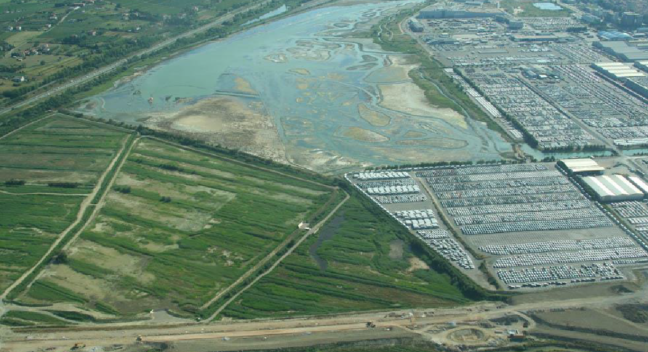
Geographic context and climate challenges Škocjanski zatok is a remnant of a brackish wetland which once surrounded the city-island of Koper. Today, this Nature Reserve is an urban wetland representing a good example of the coexistence of the natural environment and urbanisation, which is making a city safe, resilient, and sustainable. The water sources […]
Systemic science-based citizens informing on the causes and consequences of climate change

Description Since climate change is an exceptionally wide subject and uncertainty is one of its basic characteristics, literacy of the population is not a one-off action. It includes following the latest knowledge on the climate change, its causes and consequences. The Intergovernmental Panel on Climate Change (IPCC) is the leading international organisation dealing with climate […]
Climate proofing of building codes

Photo by Scott Blake Description The building sector is challenged by a number of climate change impacts, including increase in temperature, higher frequency and magnitude of extreme weather events and sea level rise. Rising temperatures and extended heatwave periods can increase urban heat islands, internal and external thermal discomforts and the demand for energy […]
Early warning systems

DESCRIPTION Early warning systems (EWS) are usually key elements of climate change adaptation and disaster risk reduction, and aim to avoid or reduce the damages caused by hazards. To be effective, EWS need to actively involve the people and communities at risk from a range of hazards, facilitate public education and awareness of risks, disseminate […]