


Coastal setback zones
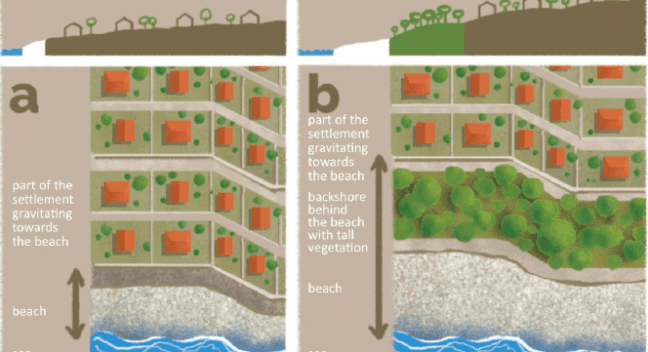
Description A coastal setback zone is a buffer area where certain or all types of development are prohibited or significantly restricted. A setback zone is usually defined by a specific distance from the shoreline, where the shoreline is often featured by the highest water mark or permanent vegetation line. The main functions of the coastal […]
Raising and extending coastal land
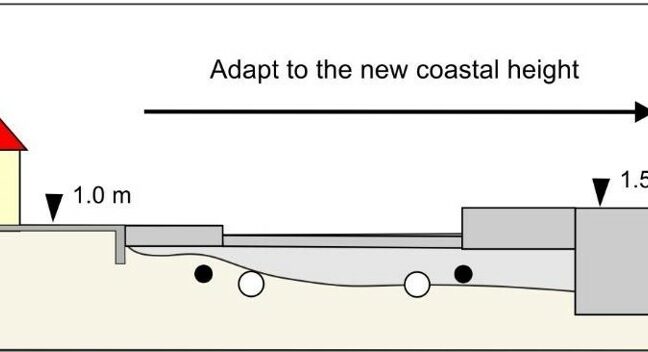
Description For centuries, coastal communities have used rocks and soil to extend and raise coastal land to gain additional space for living, but also as defence against sea storms and flooding. In more recent times, filling of wetland areas and near-shore areas below the high-tide level to build new urban or industrial sites has become […]
Beach nourishment
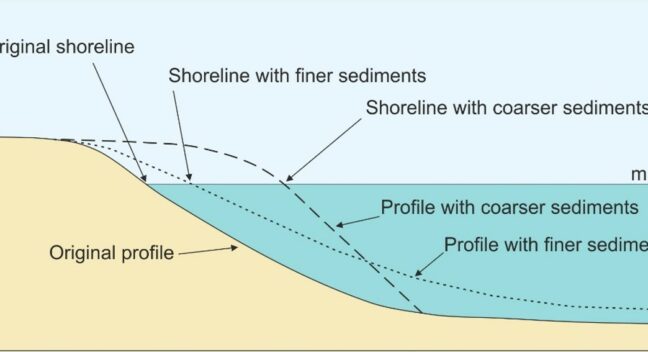
Description Beach nourishment (also known as “replenishment”) is the artificial placement of sand/gravel on an eroded shore in order to maintain the amount of deposit on the coast, and thus compensate for erosion and protect the area against storm surges. Besides fighting erosion and flooding, it most often aims at maintaining or expanding beach width […]
Seawalls and quays
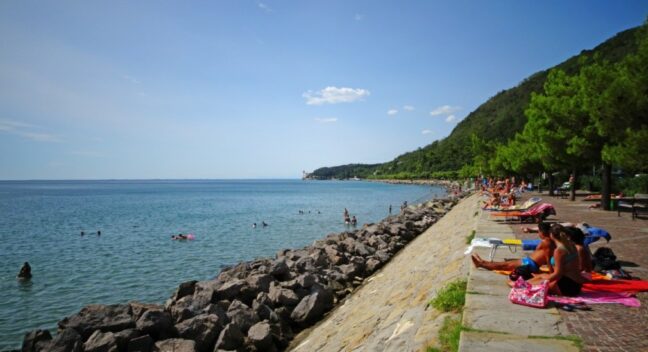
Description Seawalls are structures made of hard material (e.g. stones, concrete, masonry or sheet piles), built to protect the inland area against wave action and to prevent coastal erosion. Seawalls also serve to stabilize eroding cliffs and to protect coastal roads and settlements. They are built parallel to the shore at the transition between the […]
Managed retreat
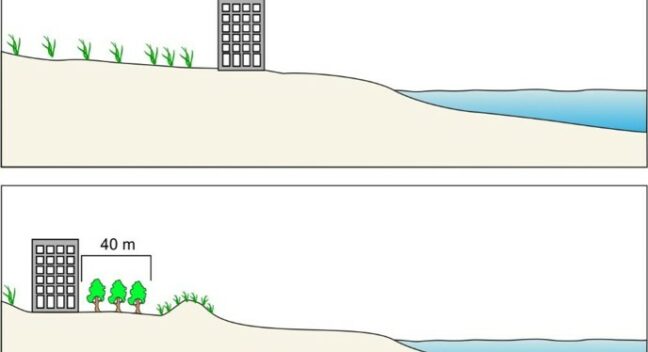
Description The rising seas are nowadays our reality. As sea levels rise, lower coasts are at risk of inundation, coastal storms occur more often, and coastal erosion and seawater intrusion are on the rise. Storms and cyclones that occur in the Mediterranean Sea have already had an occasional impact on our coasts. With the rising […]
Groynes, breakwaters, artificial reefs and jetties
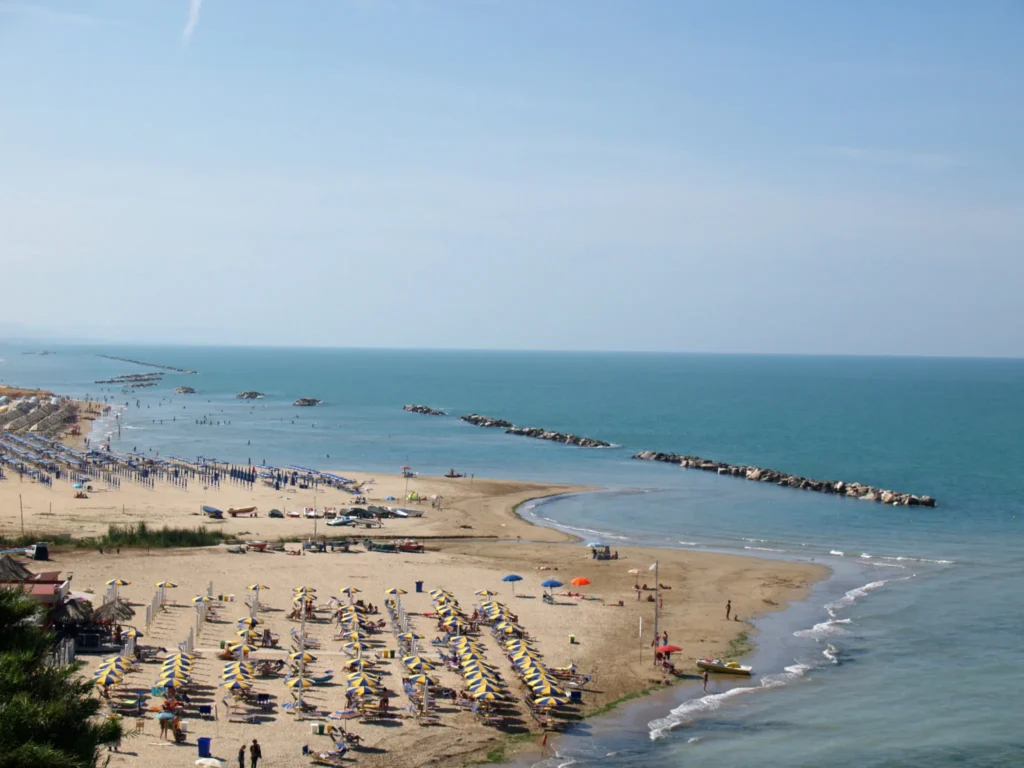
Description A groyne is a shore protection structure built perpendicular to the shoreline to reduce the longshore drift and to trap sediments (I, Γ, Y, ৲ configurations are frequently used). Since groynes induce an updrift beach expansion, and trigger a downdrift erosion, a series of groynes acting together to protect a beach (“groyne system”) is often needed, […]
Cliff stabilization and strengthening
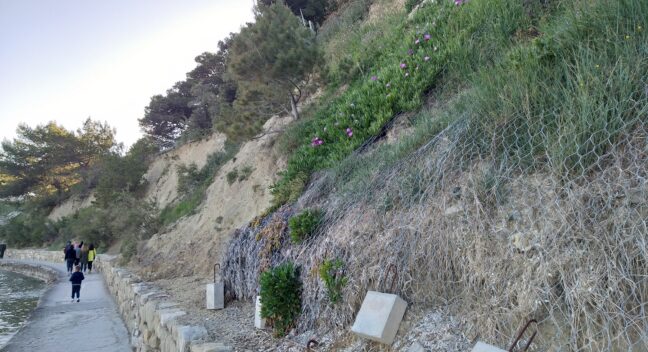
Description Coastal cliff stabilisation techniques are ‘green’ measures to reduce cliff erosion and its consequences – landslide, collapse, falling of rocks – compared to cliff strengthening techniques that are ‘grey’ measures. Decisions on which methods to apply are based on the natural characteristics of the cliff (nature of the cliff, cliff geometry, hydraulic behaviour and […]
Storm surge gates / flood barriers
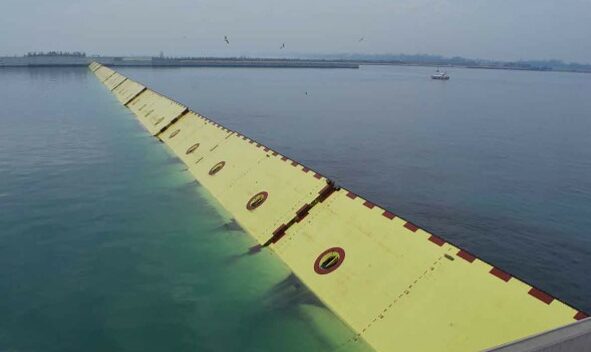
Description Storm surge gates/flood barriers are fixed installations that allow water to pass in normal conditions, and have gates or bulkheads that can be closed against storm surges or spring tides to prevent flooding. They are built to protect urban areas and infrastructure where storm surges and sea flooding could have major impacts. They can […]
Adaptation through integrated land-use planning

Description Integrated land-use planning involves the allocation of land for different uses balancing economic, social and environmental values at national or sub-national levels. It is the process of supporting decision makers and land users in selecting the best combination of land uses to meet multiple needs of people, while safeguarding natural resources and ecosystem services. […]
Protection and restoration of Posidonia oceanica meadows
Description In the case of beach/coastal erosion, an important „defence role“ is played by seagrasses. Seagrasses entrap the sediment, stabilize the seafloor and thus, prevent erosion of the coasts. When seagrasses trap the sediment, the bottom gets shallower, and the waves break further away from the shoreline, resulting in less coastal erosion during storms. Seagrasses also slow […]