


Raising and extending coastal land
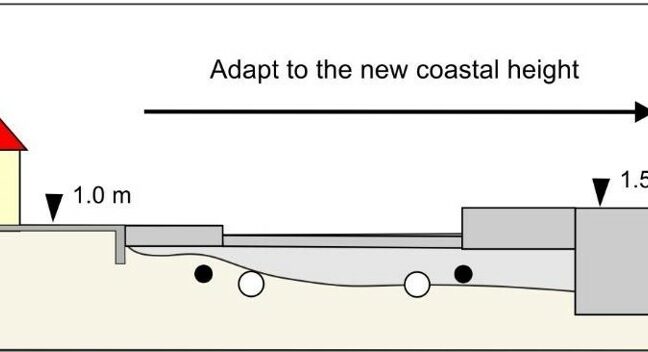
Description For centuries, coastal communities have used rocks and soil to extend and raise coastal land to gain additional space for living, but also as defence against sea storms and flooding. In more recent times, filling of wetland areas and near-shore areas below the high-tide level to build new urban or industrial sites has become […]
Beach nourishment
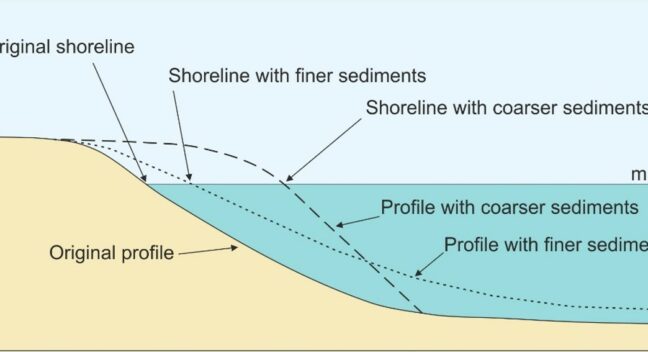
Description Beach nourishment (also known as “replenishment”) is the artificial placement of sand/gravel on an eroded shore in order to maintain the amount of deposit on the coast, and thus compensate for erosion and protect the area against storm surges. Besides fighting erosion and flooding, it most often aims at maintaining or expanding beach width […]
Seawalls and quays
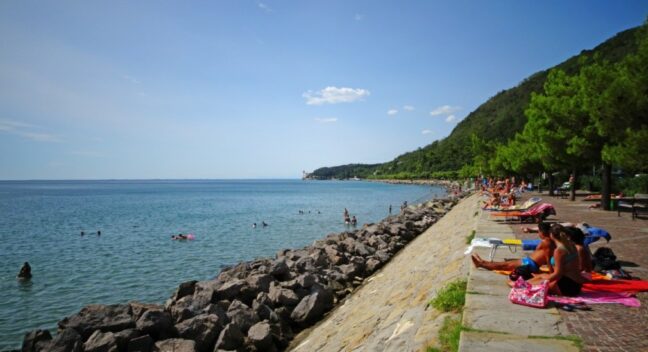
Description Seawalls are structures made of hard material (e.g. stones, concrete, masonry or sheet piles), built to protect the inland area against wave action and to prevent coastal erosion. Seawalls also serve to stabilize eroding cliffs and to protect coastal roads and settlements. They are built parallel to the shore at the transition between the […]
Groynes, breakwaters, artificial reefs and jetties
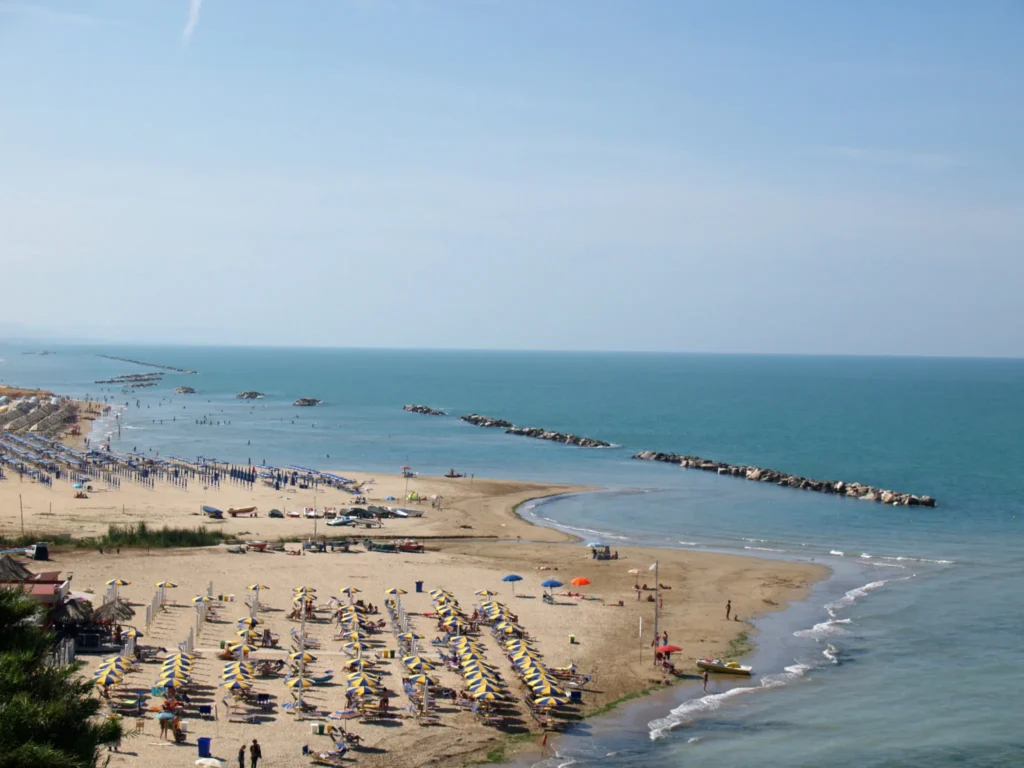
Description A groyne is a shore protection structure built perpendicular to the shoreline to reduce the longshore drift and to trap sediments (I, Γ, Y, ৲ configurations are frequently used). Since groynes induce an updrift beach expansion, and trigger a downdrift erosion, a series of groynes acting together to protect a beach (“groyne system”) is often needed, […]
Cliff stabilization and strengthening
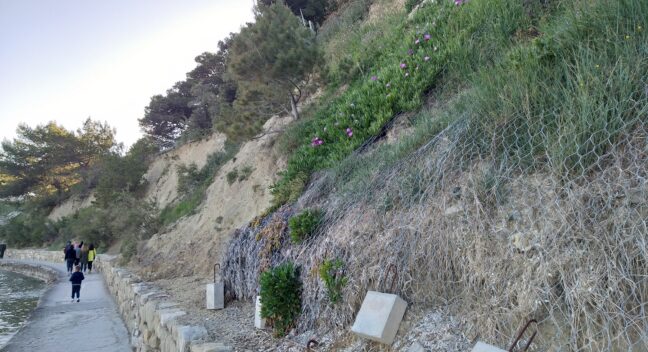
Description Coastal cliff stabilisation techniques are ‘green’ measures to reduce cliff erosion and its consequences – landslide, collapse, falling of rocks – compared to cliff strengthening techniques that are ‘grey’ measures. Decisions on which methods to apply are based on the natural characteristics of the cliff (nature of the cliff, cliff geometry, hydraulic behaviour and […]
Storm surge gates / flood barriers
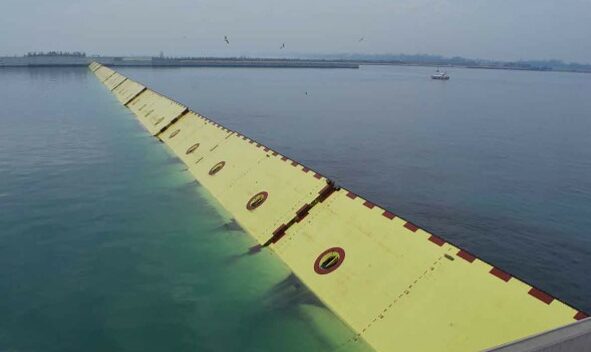
Description Storm surge gates/flood barriers are fixed installations that allow water to pass in normal conditions, and have gates or bulkheads that can be closed against storm surges or spring tides to prevent flooding. They are built to protect urban areas and infrastructure where storm surges and sea flooding could have major impacts. They can […]
Water saving and recycling
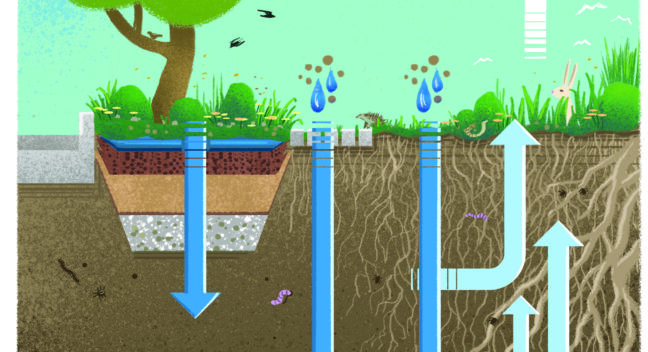
DESCRIPTION Longer dry periods in Europe and a decreasing trend in average precipitation have been experienced since the second half of 20th century, especially in summer and in southern areas, including the Mediterranean and the Adriatic-Ionian region (EEA, 2017 indicator assessment of precipitation) leading to occasional water shortages. In addition, the increase of temperature projected […]
Integrated system for the protection of Venice and its lagoon against flooding
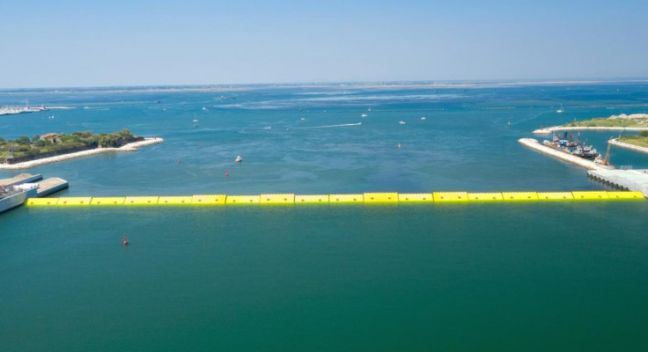
Geographic context and climate challenges Located along the northernmost stretch of the Italian Adriatic coast, the Venice lagoon is a large (550 km2) shallow water (average depth around 1 m) system connected with the sea through three inlets (from north to south Lido, Malamocco and Chioggia). Two main urban areas are located within the lagoon: […]
Water sensitive urban and building design

Description Changing climate in the Adriatic region coupled with ever increasing coastal urbanization results in the increase of water related ecological issues. Urban areas are characterized by high levels of surface sealing in the form of buildings and other impermeable surfaces such as streets, sidewalks and parking lots. As water is unable to infiltrate the […]
Improved water retention and irrigation efficiency in agricultural areas
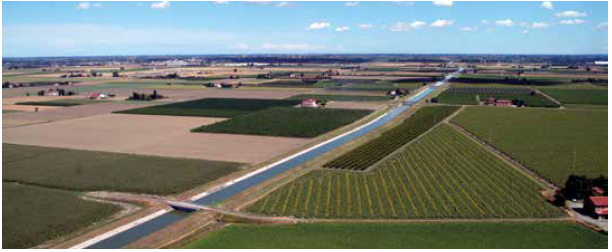
Description Soil moisture is the component of the water cycle that is accessible by the roots of plants and the quantity of water available is a major steering factor for plant growth. Soil moisture content is a factor of rainfall, evapotranspiration, surface run-off and deep percolation, and is therefore sensitive to changes in temperature and […]