Geographic context and climate challenges
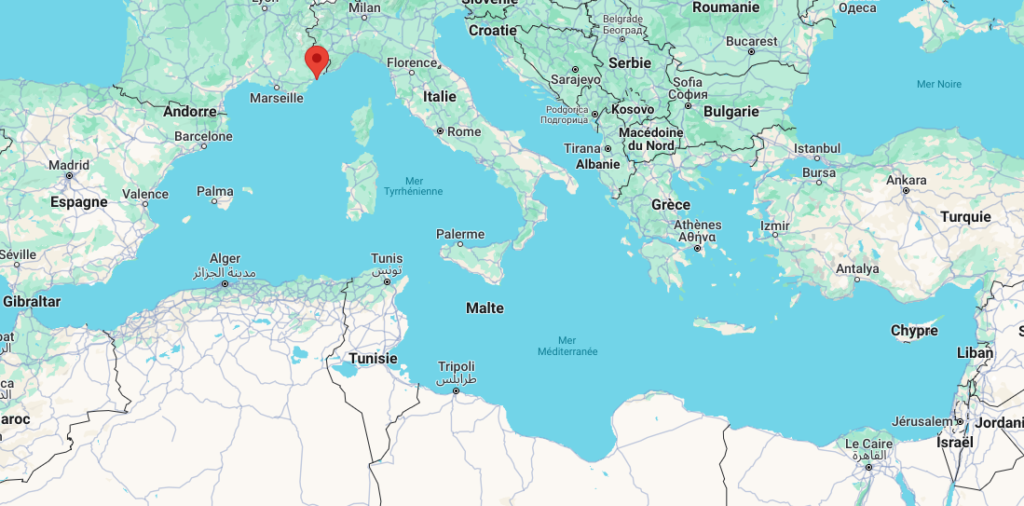
Tunisia is a South Mediterranean country with a population of approximately 11 million (RGPH 2014). Despite its mediterranean status, the climate of Tunisia is significantly drier than that of its Northern counterparts, with its southern regions receiving 156 mm/yr of rain on average (SSET 1998).
At the national level, these scarce water resources are centrally managed by the “Ministry of Agriculture, Hydraulic Resources and Fisheries”. This institute is represented at the regional level by 24 “agricultural development regional offices”. At local level, “Groupements de Développement Agricole” (GDA) are tasked with managing irrigation and drinking water systems in rural areas.
In Gabès Governorate, which is located in the SE of Tunisia, the water situation is dire. In terms of rainfall, the average annual precipitation is 158 mm for Gabès watershed with extremely dry years dipping to a low of 4.5 mm (Jemai et al 2016). Moreover, medium and long-term climate forecasting models derived from historic precipitation data show that dry episodes are slowly taking prevalence over rainy fronts (Jemai et al 2018).
With an irrigated agricultural area of approximately 7 262 ha, and a flourishing agricultural sector, this climate reality threatens the economy of this governorate. Also, given the fact that the annual agricultural water usage reached 156.5 million m3 in 2019, with rainfall waters paling by comparison (15.61 million m3) (PEBD 2019), non-conventional water resources became essential for sustaining agricultural activities (surficial and deep groundwater, treated wastewater). In fact, water pumped from deep aquifers, which is characterized by a relatively high salinity (2.5 to 5 g/l) (PEBD 2019), represents most of the groundwater used in this governorate (Beyrem et al 2015).
To exploit such brackish waters for irrigation, desalination is required to reduce their salinity to usable levels (1.5 g/l or less). Because of this, Tunisia adopted desalination since 1983, with more than 120 operational stations as of date. 86 % of the latter desalinate water using the reverse osmosis (RO) process (IRESA-GIZ project 2017). However, 50% of their output provides drinking water for urban populations in the South according to the same report. In addition, given the dependency of Tunisia’s energy sector on thermal power generation (97%) according to official numbers, the fluctuating cost of natural gas required to generate electricity for the RO process may hinder the economic sustainability of desalination stations. Furthermore, more desalinisation units require more fuel and thus emit more CO2, which further contributes to the current climate change trends. Therefore, greener, decentralized and autonomous solutions are required to meet the agricultural water demand in Southern Tunisia.
Objectives
Gesellschaft für Internationale Zusammenarbeit (GIZ) and L’Agence de promotion des investissements agricoles (APIA) built a small-scale and autonomous desalination station in an agricultural farm in Gabès governorate with the following aims in mind:
- Demonstrate the technical and economic viability of a solar photovoltaic desalination plant that purifies brackish water for irrigation in Gabès
- Assessing the impact of solar photovoltaic electricity generation technologies on the cost and profitability of reverse osmosis desalination for agricultural use in a South Tunisian setting.
- Evaluate the environmental and social impacts as well as the ecological and economic sustainability of such technologies (e.g. Introducing high value crops for maximum water valuation)
- The valuation of reverse osmosis using salt resistant crop plant.
- Define and promote a blueprint business model for economically profitable and renewable farms in Tunisia.
- Building a renewable and economically profitable farm to attract investments from the private sector.
Adaptation measures implemented in the case
Improvement of irrigation efficiency
Renewable desalination by RO
Agricultural management and plant selection
Solutions
- the process that led to the identification and design of adaptation options and solutions,
In Tunisia, multiple brackish water desalination units are operational. In Gabès, the existing desalination plant produces 8 500 m3/day through the RO process. However, the energy required for its operation is provided by the National Company of Electricity and Gaz (STGE) (SONEDE 2015). Therefore, it is mostly non-renewable energy, the price of which depends on the natural gaz market and other external factors to maintain a manageable cost of electricity. In addition, the current output of the station, which provides drinking water to the urban populations of the governorate, is just a fraction of its initial production rate in 1995 (34 000 m3) because of maintenance issues and the lack of sustainable raw water resources (SONEDE 2015). Therefore, questions arise regarding the sustainability and maintenance cost of big centralized desalination units. This lead authorities and different actors in the agricultural sector to begin the search for decentralized, sustainable and autonomous water desalination solutions.
- the solutions identified and in case implemented,
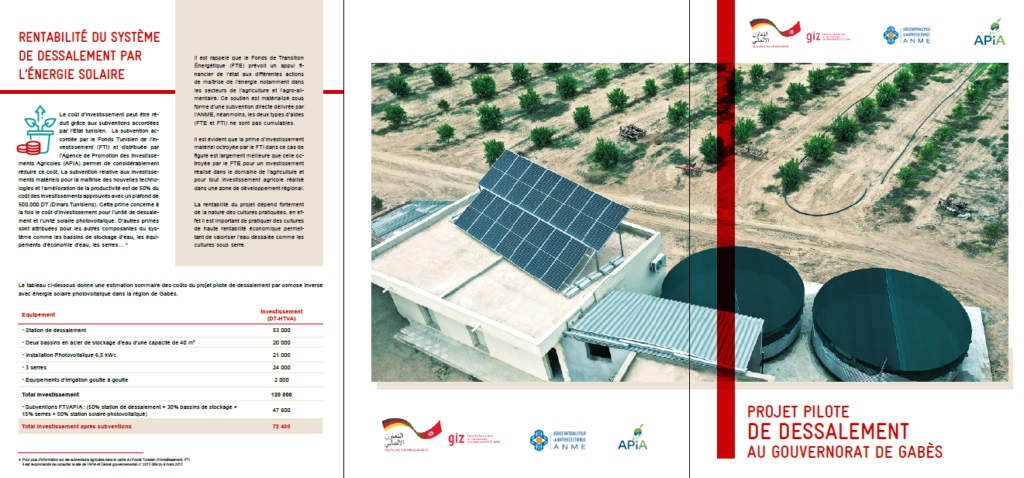
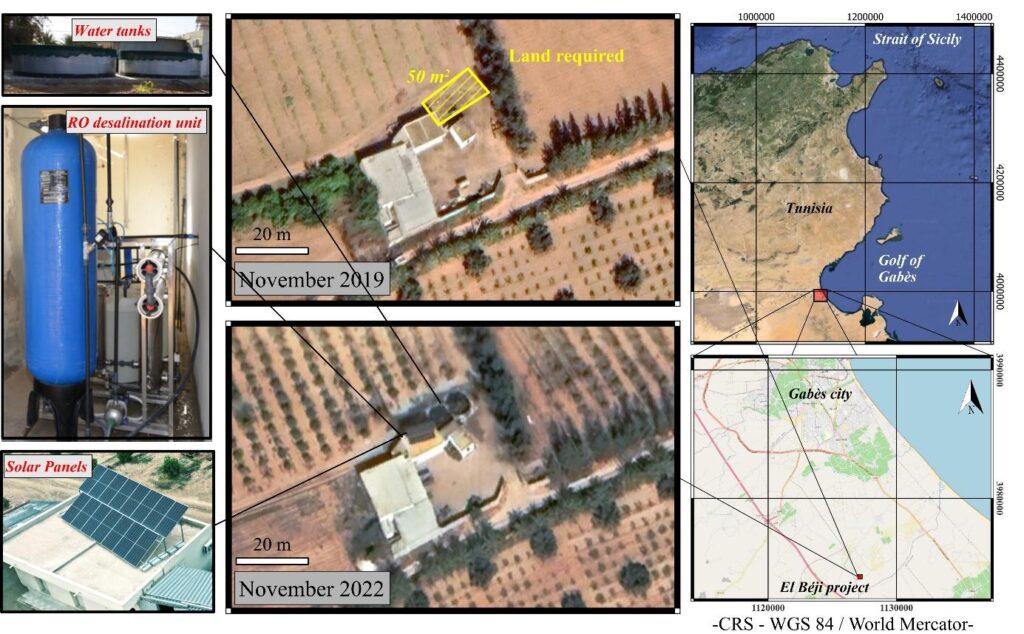
Taking the above issues into account, a renewable small-scale desalination unit (area = 108 m2) was considered for testing in El Béji farm (42 ha), which is located 14 km South of Gabès city. The basic premise of the test is the use of low-cost photovoltaic panels to power a small RO desalination unit. In addition to being fully autonomous and renewable, the electricity generated at the farm produces zero CO2 emissions. Furthermore, the climate setting of the Tunisian South is ideal for such technology given the high solar radiation levels in the area. However, the latter is also responsible for high evapotranspiration levels, which increases plant water use. In the light of this, the water use efficiency was enhanced through constructing a drip irrigation system coupled with greenhouse shade nets to protect plants from the hot sun of the South. Finally, a plant selection thought process was followed to pick the most economically profitable and water efficient plants, thus ensuring good water valuation.
- related technical aspects,
The operational scheme of the station according to GIZ (2019), is similar to that of big RO plants. Nevertheless, instead of a diesel generator, the RO unit in El Béji farm is equipped with photovoltaic panels that produce 13.5 KWc and are connected to a low-voltage distribution system. The latter nominal power figure is deemed sufficient to purify enough water for irrigating a 2ha greenhouse field. The plant variety selected in the experiment is comprised of piper (0.5ha), strawberries (0.25 ha), tomatoes (0.25 ha) and melon (1 ha), with an average daily water usage of 48m3 (1.4 KWh/m3). To meet this demand, a small RO system is used, which produces on average 48m3/day of purified water (0.5g/l salinity). As for the RO reject, a daily debit of 32m3 of brine solution (5 to 6 g/l) is expected, most of which will be utilized to irrigate a 1 ha Alfalfa field (a plant characterized by its high salt tolerance). A lesser portion is planned to join the natural water drainage system through an existing 1.5 km drainage canal. The raw and purified waters are stored in 80m3 and 40m3 tanks respectively.
In economic terms, this project required a significant initial investment of 301 500 TND (approximately 97 000 USD). These funds are used to purchase a full RO system with two storage basins (96 600 TND), photovoltaic panels with a nominal capacity of 13.5 KWc (45 500 TND) and greenhouse tunnels to cover 2 ha (159 400 TND). With a negligeable appraisal cost of 1840 DNT and approximately 1 third (34 %) of the upfront investment being subsidized by the APIA, the time to revenue is estimated at 4 years, given the average projected yearly revenue of 76 000 DNT (approximately 25 000 UD).
- the expected added value for climate change adaptation, (iv) contribution of the identified solutions to mitigation, if any. Max: 4,000 characters including space.
The success of this experiment will provide hard data for investors, thus promoting renewable and greener agricultural technology. In fact, for a country like Tunisia, the mass adoption of such desalination techniques will reduce the carbon foot print of its agricultural sector, which occupies the fourth place in terms of greenhouse emissions (RIN-GES 2022). For instance, the desalination of water for irrigating the 2 ha in the above experiment requires 24 528 kW-year of electricity, which translates to 14 226 kg of CO2 emissions considering the average CO2 emission factor of 0.58 kg/KW in Tunisia (U4E 2019). In addition, the widespread use of renewable electricity options will help the country reduce its dependency on fossil fuel electricity, which are mostly imported from other countries.
Leader of the initiative and key partners
The leader of El Béji farm renewable desalination project is the deutsche Gesellschaft für Internationale Zusammenarbeit (GIZ), which is active in Tunisia since 1970. It is currently working on behalf of the German Government and the European Union (EU) that fund most of its operations. Due to its regular participation in local and regional development projects within Tunisia’s borders, an office was established in Tunis in 1999 to ensure a closer and more efficient follow-up of GIZ activities. The involvement of this institute in Tunisian development projects became more relevant after the Arab Spring events (2011) due to the lack of economic dynamism and the high unemployment rate (15%) that characterize the current transitional period.
Given the challenging water situation in Tunisia, the priority areas of GIZ cooperation include but are not limited to: (i) sustainable economic development and employment promotion, (ii) regional development, local governance and democracy and (iii) protection and management of water and natural resources. As such, the focus of GIZ on environmental governance including water management issues and their long work experience in the Maghreb setting ensures a smooth and savvy management of the financial and administrative risks associated with local development projects. In addition, GIZ is a well-known actor in the region with an established network of partners across North Africa, which grants it a good operational flexibility in the Maghreb region.
The Tunisian government, is also a partner in this pilot farm project and is represented by two institutions. The main one is l’Agence de Promotion des Investissements Agricoles (APIA), which is tasked with promoting private investment in the agricultural sector across Tunisia. To achieve its goals, this governmental agency provides financial, technical and legal support to Tunisian farmers. That being the case, the agency is heavily invested in innovative agricultural projects. The secondary governmental partner in El Béji project is l’Agence Nationale pour la Maîtrise de l’Energie (ANME), which is entrusted by the Tunisian government with designing and implementing the state’s energy management policy. Therefore, ANME explores multiple power generation technologies to promote sustainable and renewable energy generation practices in the country.
However, the key stakeholders on the long run are the Tunisian farmers of the South, represented by the owners of El Béji farm, who are directly impacted by the success of this initiative.
Stakeholder participation
Being the main stakeholder of the project, GIZ is behind the conceptualization and funding of this pilot experiment. However, to study the feasibility of the project, they consulted with KHAZEN Consulting cabinet who produced hard data regarding the financial, environmental and technical aspects of the experiment. In addition, this cabinet assisted in communicating the project’s ideas to the wider public (e.g. GIZ 2019).
Nevertheless, the significant financial contribution of the Fonds Tunisien de l’Investissement (FIT), which was received through the APIA and ANME, helped cover a third of the project’s cost. This was essential in reducing the time to revenue of the project, thus encouraging its adoption by the farm’s owners. In fact, the latter stakeholder’s role is key to success since they trusted GIZ and their partners with managing a significant portion of their farm. Their risk tolerance and wiliness to explore uncharted territories was pivotal for providing a significant and representative testing ground of the proposed solution.
Success and limiting factors
Considering the innovativeness of the project and its target audience, the main success factor for this initiative was its profitability. More precisely, the time to revenue and the maintenance cost. The APIA subsidies received by the project leader help improve the former performance parameter by reducing the time to revenue from 6 to 4 years. However, the cost of building the desalination station is considered high in the Tunisian setting, which may constitute one of the main limiting factors that hinder the mass adoption of the proposed solution by the south Tunisian agricultural community. That being so, high value crops (HVC) products were selected to increase the economic value of desalinated water. For this reason, replicating this model for low-value crop may be challenging. Still, this limitation can be overcome in the coming years thanks to the increasing affordability of photovoltaic solar panels and the enhanced efficiency of modern RO systems. In fact, the combined effect of both trends will reduce the cost of each m3 of desalinated water. In addition, a financial mechanism is needed to promote this technology to the private sector, especially small-scale farmers. Such a mechanism can be provided by regional, national and international agricultural banks that must be enticed to propose low-interest financial solutions to small farms.
Although El Béji farm experiment is progressing according to plan as of 2024, a sudden decrease of the selling price of the crop output may constitute a significant risk to the profitability of the project. To tackle this issue, multiple export markets may be considered as a substitute for managing price volatility.
Finally, a good promotion of the project’s idea and its economic feasibility is essential for mobilizing all actors involved in the Tunisian agricultural sector. To do so, multiple channels may be used such as electronic and print media outlets, short documentaries, promotion in agricultural salons, poster promotion in multiple economic and agricultural conferences and raising awareness through governmental and non-governmental outlets. It is worth noting that a couple of press publications (Univers News and African Manager) have already shared news of El Béji farm renewable desalination project and its objectives. However, more advertisement is needed to effectively market the project’s idea to the public at large.
From a legal stand point, multiple questions arise regarding the environmental impact of this technology. The RO reject waters in particular are of central importance from a regulator’s point of view on account of their high salinity. Also, the disposal and recycling of solar panels is not regulated in Tunisia as of data, which may cause issues down the road given the hazardous and high toxicity potential of expired panels (Kwak et al 2020). Such aspects must be considered before popularizing the technology across the country.
Costs and benefits
El Béji Farm renewable desalination project provides a blueprint for green and sustainable agriculture in an arid Mediterranean setting. The success of this project will also allow reducing the carbon footprint of the agricultural sector, which occupies fourth place in Tunisia and second place worldwide in terms of CO2 emissions. In economic terms, this project required a significant initial investment of 301 500 TND (approximately 97 000 USD). These funds are used to purchase a full RO system with two storage basins (96 600 TND), photovoltaic panels with a nominal capacity of 13.5 KWc (45 500 TND) and greenhouse tunnels to cover 2 ha (159 400 TND). With a negligeable appraisal cost of 1840 DNT and approximately 1 third (34 %) of the upfront investment being subsidized by the APIA, the time to revenue is estimated at 4 years, given the average projected yearly revenue of 76 000 DNT (approximately 25 000 UD). Therefore, the 97 000 USD invested by the GIZ and the FIT through the APIA, is a reasonable cost for promoting climate-friendly prosperity.
In fact, Tunisia is one of the most vulnerable countries to climate change, which requires a national-scale strategy for adapting to the current dry climate trend. Consequently, the increasing affordability of solar photovoltaic units will help to meet the energy demand of small desalination units. In fact, the flexibility offered by the latter solution is a significant advantage compared to big centralized desalination plants that require a couple of years to build, only to stay operational for a decade or two at maximum. Moreover, the adoption of this technology can help democratize water desalination through providing a flexible free-market solution to respond to the increasing demand on non-conventional water resources.
Implementation time and lifetime
The final results of the feasibility analyses were communicated in December 2019 while the operation of the desalination unit began in June 2022. This accounts for a one-and-a-half-year period from conceptualization to inauguration. Considering the typical 25 to 40 years useful life of photovoltaic solar panels and the 10 to 15 years lifespan for the RO system, a conservative estimation of the project’s life duration without additional investment is set around 10 years. However, the main objective of promoting renewable technology to the wider agricultural community requires more time and may necessitate one to two additional decades.
Given the above estimations and the average CO2 emission factor of Tunisia (0.58 kg/KW), and a ten-year operational period, the current project will eliminate 145 tons of projected CO2 emissions by 2032 that would have been emitted through thermal electricity generation. Such results in a small 2 ha field inspire hope for the adoption of renewable agriculture practices in the Maghreb region.
Keywords
Southern Tunisia, Renewable desalination, Photovoltaic panels, Reverse Osmosis, Sustainable agriculture, Climate change adaptation.
Contacts
Mr Amin Chtioui (amin.chtioui@giz.de), Head of the project ‘Renforcement du Marché Solaire (RMS)’.
GIZ-Bureau Tunisie – Rue Le Grand Boulevard de la Corniche Immeuble le Grand Boulevard Cité les Pins, 1053 Berges du Lac II de Tunis ; +216 71 967-220 ; +216 71 967-227
We are thankful to Ali Bounab who helped with the preparation of this case study.
Map
Pictures
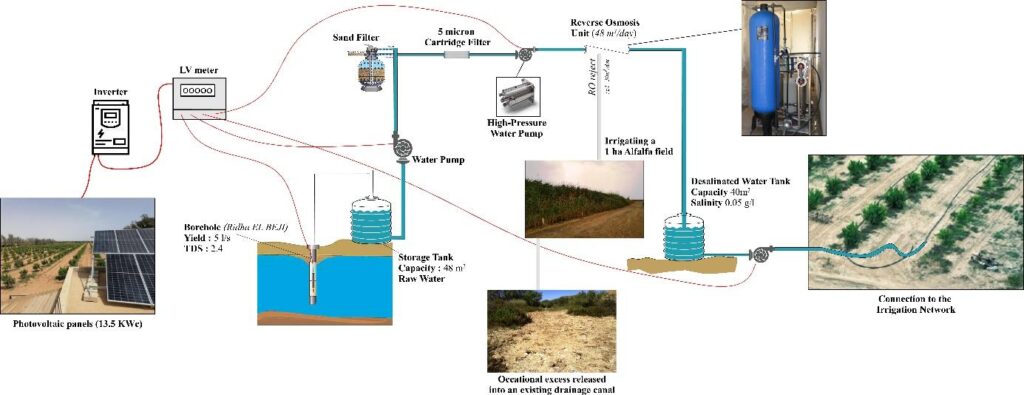
Functional scheme of the Reverse Osmisis desalination unit in El Béji farm
This sketch/scheme explains in detail how the desalination station operates and provides relevant technical specifications to facilitate replication elsewhere.
Source: Gesellschaft für Internationale Zusammenarbeit, 2019. Roundtable session
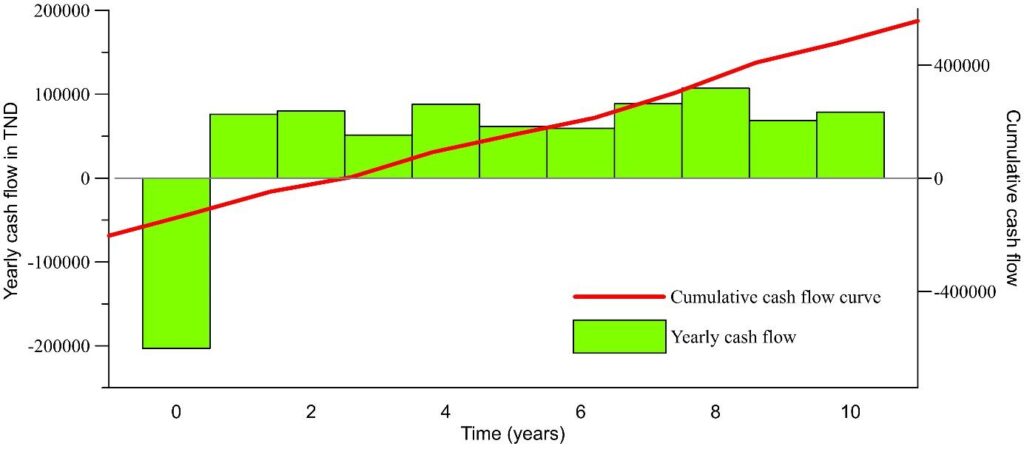
Cash flow forecast chart for El Béji farm project
This histogram helps promote the project’s idea to investors through providing an insight into its cash flow forecast given stable market conditions as well as its projected time to profit.
Source: Gesellschaft für Internationale Zusammenarbeit, 2019. Roundtable session
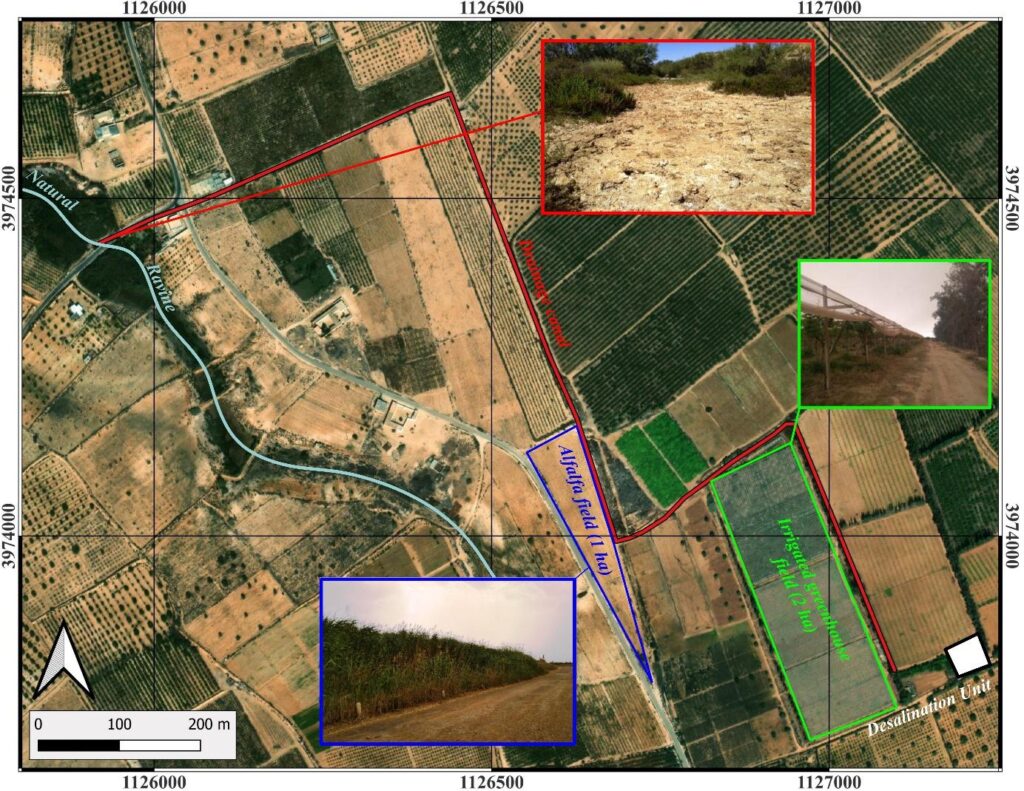
Map of El Béji farm showing the locations of Alfalfa fields, greenhouse fields and dranage canal (CRS – WGS 84 / World Mercator)
This map shows the geometry and location of the drainage canal used to evacuate the RO reject relative to the desalination station, the irrigated field and the Alfalfa field.
Source: Gesellschaft für Internationale Zusammenarbeit, 2019. Roundtable session
Documents