Geographic context and climate challenges
In Algeria, wetlands are primarily located in the northeastern part of the country, near the Mediterranean coast (Bouldjedri et al., 2011). The geographical position of northern Algeria, at the interface of European, Atlantic, Mediterranean, and tropical regions, grants it the status of a migratory crossroads for a diversity of fauna and flora species (de Bélair and Samraoui, 2000). The preliminary inventory of biological resources conducted by de Bélair and Samraoui in the early 2000s in the Béni-Belaid wetland (Jijel, Algeria) revealed the international ecological significance of this site, which hosts rare lacustrine vegetation and several endangered species. Additionally, this site is a habitat for the otter Lutra lutra and various water bird species. Consequently, the Béni-Belaid wetland, situated behind a coastal dune belt, was designated as a Ramsar site in 2003 (Bouldjedri et al., 2011).
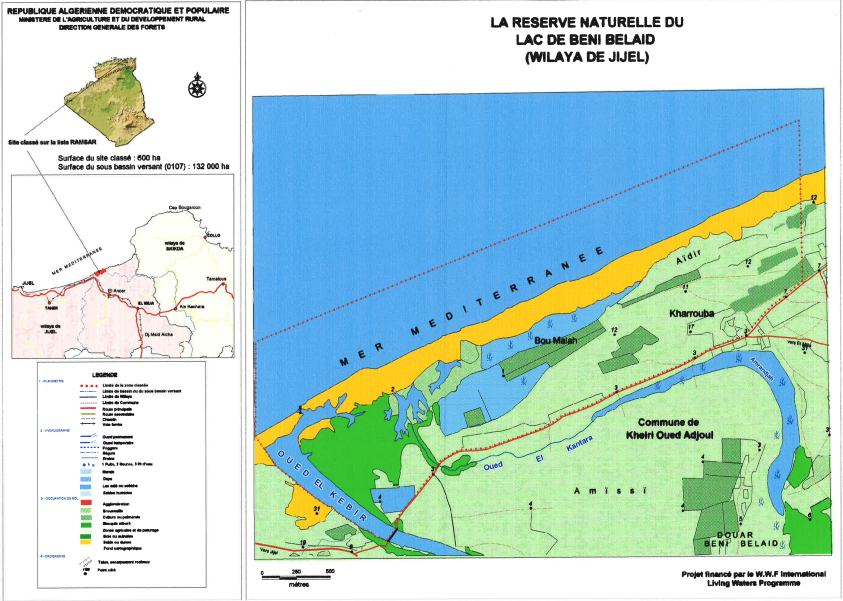
The Béni-Belaid Lake Nature Reserve covers 600 hectares, of which 200 hectares are maritime, and includes a 10-hectare freshwater lake (Figure 1). However, significant anthropogenic threats loom over this site: overgrazing leads to the lake being invaded by sand eroded from coastal dunes; agriculture causes illegal deforestation, water pollution, and irrational water resource use through excessive pumping during dry periods (Bouldjedri et al., 2011). The awareness of public authorities was manifested through a collective reflection among various stakeholders to protect the water body of this Nature Reserve by stabilizing the coastal dunes, following the observation of sand accumulation in the lake and its vegetation caused by the movement of coastal dunes. If this phenomenon persists, it will result in the complete silting up of the lake and the total loss of this protected wetland, which acts as a buffer zone against coastal risks. Notably, it plays a crucial hydrological role: during periods of low rainfall, it feeds the Belghimouze aquifer, and during periods of heavy rainfall, it helps buffer floods by retaining excess water from the Oued Adjoul (Bouldjedri et al., 2011).
Objectives
The primary objective of this intervention is the stabilization and restoration of the coastal dune belt of the Béni-Belaid Lake Nature Reserve, a Ramsar site. Over the past 10 years, the vegetation of the dune belt in this Reserve has suffered significant degradation due to various human activities (overgrazing, trampling, illicit sand extraction, etc.). This anthropogenic pressure has led to the risk of large-scale ecological and morphological changes in this area, resulting in the disappearance of vegetation cover in several parts of the Reserve. This has caused the destabilization of the dune belt and its remobilization inland, leading to the silting up of the water body (Bouraoui, 2019).
The intervention will initially focus on a pilot project aimed at trapping windborne sand to allow the natural reconstruction of the dune belt. Following this, the restoration of dune vegetation will be considered through the planting of marram grass (Ammophila arenaria), a species known for stabilizing coastal dunes with its root system and deep rhizomes. This approach represents a nature-based solution (NBS) to coastal erosion, one of the most noticeable impacts of climate change in the coastal zone.
Adaptation measures implemented in the case
Construction and reinforcement of dunes
Solutions
The project began in 2017 with the creation of a reflection committee by the Forest Conservation of the Wilaya of Jijel, bringing together multiple stakeholders from the coastal zone. The role of this committee was to:
- Conduct a diagnostic of the current state of the Reserve’s dunes (ecological, geomorphological, and anthropogenic pressures)
- Propose technical solutions
After analyzing the data and discussions, the committee proposed implementing a pilot project for coastal dune stabilization in two phases: mechanical and biological (Bouraoui, 2019). The principle of this pilot project is to study the feasibility of dune reconstruction and to determine a long-term intervention method. Two adaptation solutions were identified:
- Installation of a windbreak structure (ganivelles) for the reconstruction of the coastal dune belt (mechanical phase)
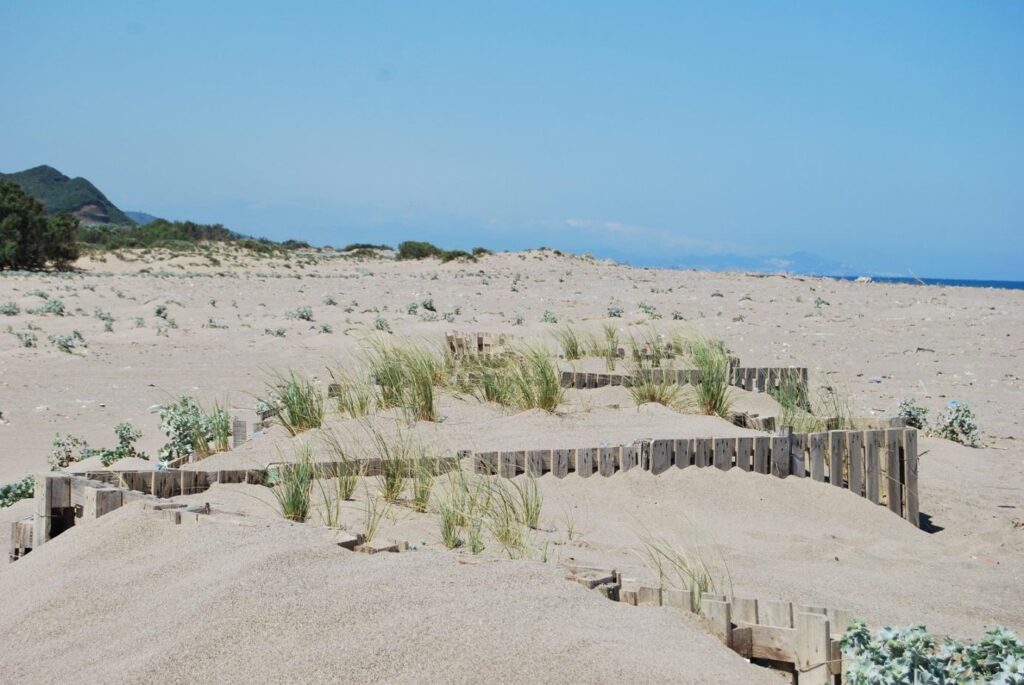
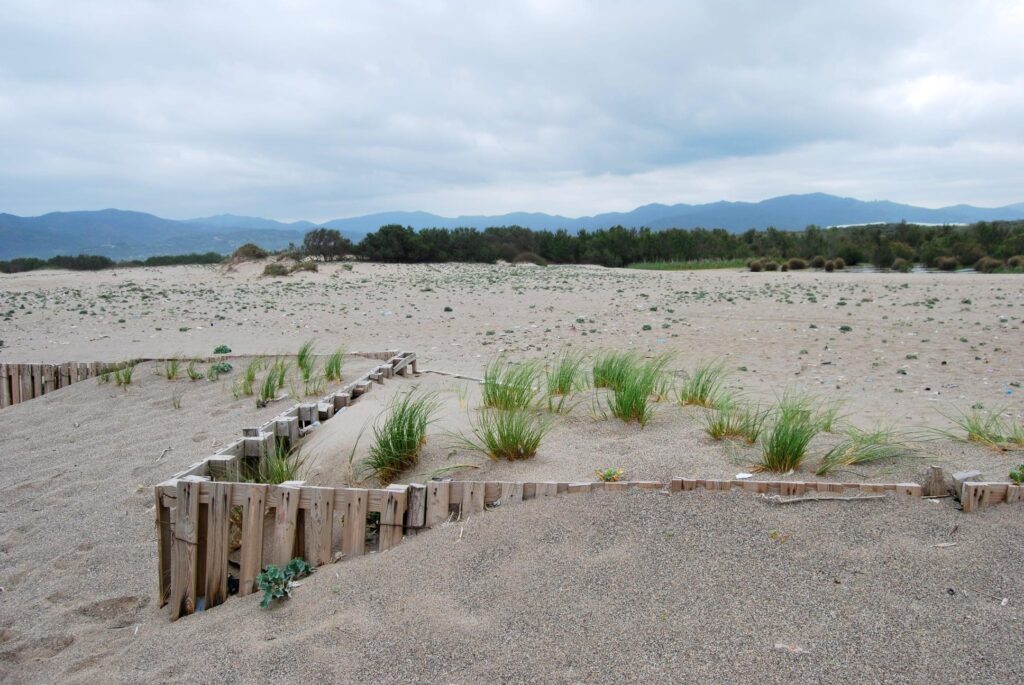
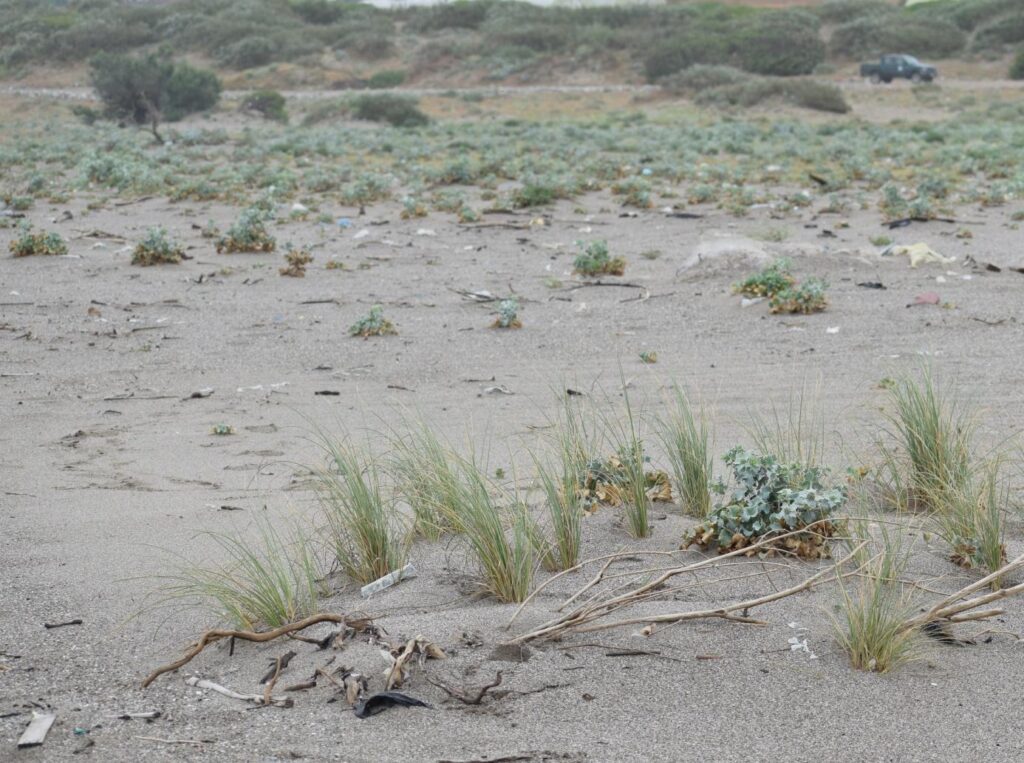
- Planting of marram grass (Ammophila arenaria) for dune belt stabilization (biological phase)
The mechanical fixation of the dune belt was achieved by installing ganivelles made of wooden slats arranged in a zigzag (W) pattern to slow the movement of wind- or sea-borne sand (Bouraoui, 2019). The slats act like fences, blocking the wind carrying sand and thus encouraging its accumulation to recreate the dune. They are used to promote the creation of artificial dunes, reduce the erosive effect of waves, and prevent sand transport to the Reserve’s water body. Additionally, a ganivelle barrier was installed at another site in the Reserve to protect the area from trampling and allow vegetation to recover.
The placement of the ganivelles was carefully chosen based on a placement plan derived from a field study (Bouraoui, 2019), considering the following measurements:
- Topographic survey and coastline measurement
- Topo-bathymetric survey
- Distance between the lake and the coastline
- GPS survey
- Orientation measurements by compass (azimuth)
- Use of satellite images (Google Earth)
The ganivelles were placed on the maritime front of the Béni-Belaid Lake wetland, midway between the upper limit of the lake and the seawater limit (Figure 1). The ganivelle area extends 30 meters in length and 3 to 4 meters in width, with a height of 1.2 meters. The implementation followed these steps:
- Determining the placement line by planting stakes linked by a cord, oriented by compass
- Placing wooden stakes with an air permeability of 1 meter, with a height equal to the pallet height plus 40 cm for the buried part
- Using round stakes 8 to 10 cm in diameter to withstand atmospheric conditions (sea wind, dune protection)
- Installing the slats by unrolling them along the stakes and laying them on the ground
- Fixing the slats to the stakes with galvanized wire
This mechanical intervention was coordinated with the planting of marram grass (Ammophila arenaria) so that after the submersion of the mechanical structure, this plant would play the role of a biological stabilizer, replacing the ganivelles which will disappear following the formation of artificial dunes. Prior to the planting of marram grass, an unprecedented experiment in Algeria for its multiplication in a nursery was successfully conducted (success rate over 80%) in collaboration with the National Institute of Forestry Research (INRF) and the University of Jijel.
Leader of the initiative and key partners
The ecological rehabilitation project of the dune belt of the Béni-Belaid Nature Reserve is the result of a transdisciplinary collective reflection led by the Forest Conservation of the Wilaya of Jijel (foresters and biologists) in partnership with the National Coastal Commission (CNL), Jijel office (planner and biologist). This project benefited from the support and technical assistance of the French expert Mr. André Martinez, Director of the environmental program at the international association UN of Peace Soldiers and mission manager for the conservation of natural areas in Provence Alpes Côte d’Azur (CENPACA).
The intervention on the dune belt was designed and coordinated by the Forest Conservation, the manager of this Ramsar site, in close collaboration with CNL-Jijel. The Forest Conservation played a central role in managing and directing on-the-ground activities, ensuring the implementation of the identified adaptation measures. CNL-Jijel provided its expertise in planning and biology to support restoration and dune stabilization efforts.
Mr. André Martinez, as an international expert, provided valuable technical advice and helped develop strategies based on best international practices. His role was crucial in ensuring that the techniques employed were both effective and sustainable.
This collaboration made it possible to mobilize diverse and complementary skills, thus guaranteeing the success of the rehabilitation project. The combined efforts of these actors allowed the implementation of adapted and innovative solutions to protect and restore the dune belt of the Béni-Belaid Nature Reserve, thereby contributing to the resilience of this ecosystem in the face of climate change impacts.
Stakeholder participation
In addition to the aforementioned actors, several other stakeholders were involved in this project. The environmental association Écologie Sans Frontière, represented by Mr. Nadjib Benayad, played a crucial role. Established in 2019, this association actively participated in the concrete implementation of actions on the ground as well as in various awareness and environmental education activities for local communities about the fragility of marine and coastal ecosystems in the Wilaya of Jijel.
A collaboration was also established with the INRF from the beginning of the project. This research institute provided its scientific and technical expertise, notably by contributing to research on the germination and multiplication of marram grass (Ammophila arenaria). The University of Jijel, through its departments of environmental and agronomic sciences, hosted the germination experiments of marram grass seeds in its research laboratories, thus providing essential academic support.
The involvement of local businesses was also crucial. The forestry company ERGR-BABORS and the private company BOUDJADJA contributed by supplying the wooden stakes and pallets necessary for the ganivelles. These materials were sourced from the waste recovery of these two companies, illustrating a sustainable recycling and reuse approach to resources.
This collaboration mobilized diverse and complementary skills, ensuring the success of the rehabilitation project. The combined efforts of these stakeholders enabled the implementation of adapted and innovative solutions to protect and restore the dune belt of the Béni-Belaid Nature Reserve, thereby contributing to the resilience of this ecosystem in the face of climate change impacts.
Success and limiting factors
The active involvement of the wetland manager and the creation of an intersectoral commission comprising representatives from the forestry and environmental conservation sectors ensured an integrated intervention approach in the coastal zone. The international expertise provided by an expert who had conducted similar projects in other Mediterranean regions (PIM Initiative) played a crucial role by offering valuable technical support and relevant experience.
Furthermore, the diagnostic of the current state of the Reserve, conducted by this commission, along with the availability of previous data on the environmental, biological, and ecological aspects of the Reserve and its dune belt, served as a baseline (t0). This allowed for a comparison of the current conservation state with its previous condition, identification of intervention priorities, and more effective project design.
The involvement of the INRF and academics in this project enabled the identification of a nature-based solution, which served as the theme for a Master’s thesis and was of great interest to the Reserve manager. The manager constantly seeks innovative and economically viable solutions to traditional coastal defense structures, which are often costly (e.g., breakwaters) and have a significant environmental impact. The pooling of scientific research resources between specialized organizations with the necessary resources and the management structure represented a win-win commitment. This collaboration helped cover significant financial costs that would not have been available without this engagement.
The stakeholders who actively contributed to this project operated in a context of no dedicated funding and limited staff availability, often engaged in their regular tasks and emergency situations. The creation of the environmental association Écologie Sans Frontière in 2019 and its involvement in this project facilitated on-the-ground work for data collection for long-term monitoring purposes.
The absence of funding and dedicated funds for this project was a limiting factor, preventing the extension of the intervention to a larger area.
Costs and benefits
The financial cost of this initiative is negligible since the materials used were sourced from recycled materials provided by the forestry company ERGR-BABORS and the BOUDJADJA company. Additionally, the project team comprises staff from the Forest Conservation of the Wilaya of Jijel, the CNL-Jijel, and volunteer members of the Écologie Sans Frontière association.
However, based on the prices of the materials used, the overall and approximate value of the project is estimated at around 1500 Euros, distributed as follows:
- 50 slats: unit price 1000 DZD
- 50 stakes: unit price 200 DZD
- 10 workers at 2000 DZD/day for 3 days of work
- Various tools: 10000 DZD
- Costs for the production of marram grass in the nursery: estimated at 50000 DZD
The rehabilitation of the coastal dune belt offers numerous significant benefits:
- Barrier against sea intrusion: The reconstruction of the dune belt limits sea intrusion into the lacustrine habitat, thereby increasing the resilience of the dune/lake system to climate change impacts, such as coastal erosion
- Reduction of habitat fragmentation: Reconstructing a continuous dune belt ensures greater ecological and environmental continuity. This promotes the conservation status of dune plant species by reducing indiscriminate trampling of the dunes
- Protection of the coastal part of the Reserve: Rehabilitation protects the coastal area, preventing the lake from being silted up, preserving its aquatic biodiversity, and improving the natural state of the beach and coast in general
- Enhanced protection of agricultural lands: Interior and adjacent agricultural lands (Populus alba poplar grove) are better protected against flooding. Additionally, groundwater recharge is enhanced, which is crucial for the region
The co-benefits of this initiative include better management of natural resources, increased awareness among local communities of the importance of dune conservation, and aesthetic and ecological improvement of the area. The initiative also strengthens local resilience to the impacts of climate change, including reducing vulnerability to coastal erosion and storms.
Implementation time and lifetime
An on-site visit took place in July 2017 in the presence of a TV channel to communicate this initiative on a national scale. Towards the end of 2017, work began on installing the givelles.
In summer 2018, maram grass seed harvesting operations were carried out in three stations (Rocher aux Moules beach, Sidi Abdelaziz dune and Grand Phare beach) in preparation of the second phase of biological fixation of the dunes. In October 2018, the Jijel Forest Conservation presented the pilot project to representatives of the General Directorate of Forests (DGF), National Parks, Forest Conservation of other Wilayas, and forest training centers, followed by a field visit. At the end of 2018, the first germination tests of maram grass seeds were carried out at the INRF laboratory.
In early 2019, maram grass multiplication was successful, marking the first successful experiment in Algeria after several failed attempts.
Keywords
Coastal erosion, dune belt, ecological rehabilitation, nature reserve, nature-based solution, wetland, Ramsar Convention.
Contacts
Mr Nadjib Benayad, Forest Conservation of the Wilaya of Jijel and president of the association Écologie Sans Frontière (ecosfas@yahoo.com)
Mr Mahmoud Bouherrar, National Coastal Commission (CNL), head of the CNL-Jijel (cnljijel20@gmail.com)
We are thankful to Ibrahim Boubekri who helped with the preparation of this case study.
Source for more detailed information
Facebook Page – Association Écologie Sans Frontière : Association Écologie Sans Frontière | Facebook
Bouraoui, F. C. (2019). Utilisation de la plante d’Oyat (Ammophila arenaria L.) pour la fixation des dunes côtières de la réserve naturelle de Beni-Belaid (Site RAMSAR) Wilaya de Jijel. Master, Université de Jijel.
http://dspace.univ-jijel.dz:8080/xmlui/handle/123456789/4777
Bouldjedri, M., de Bélair, G., Mayache, B., & Muller, S. D. (2011). Menaces et conservation des zones humides d’Afrique du Nord: le cas du site Ramsar de Beni-Belaid (NE algérien). Comptes rendus biologies, 334(10), 757-772.
De Belair, G., & Samraoui, B. (2000). L’éco-complexe des zones humides de Beni-Belaid : Un projet de réserve naturelle. Sciences & Technology. A, exactes sciences, 115-124.
Map
Pictures
Installation of windbreak structure using ganivelles
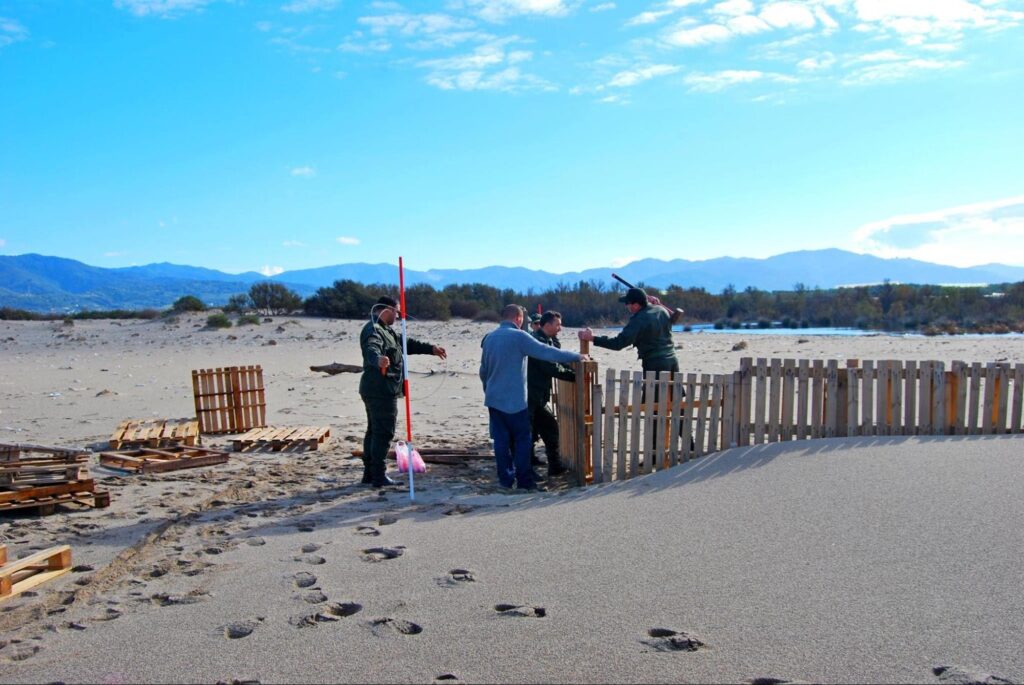
This site was selected as a test area for dune fixation at the Béni-Belaid Nature Reserve in the Wilaya of Jijel (northeastern Algeria).
© Nadjib Benayad, Forest Conservation of the Wilaya of Jijel / Association Écologie Sans Frontière
Marram grass seed collection operation
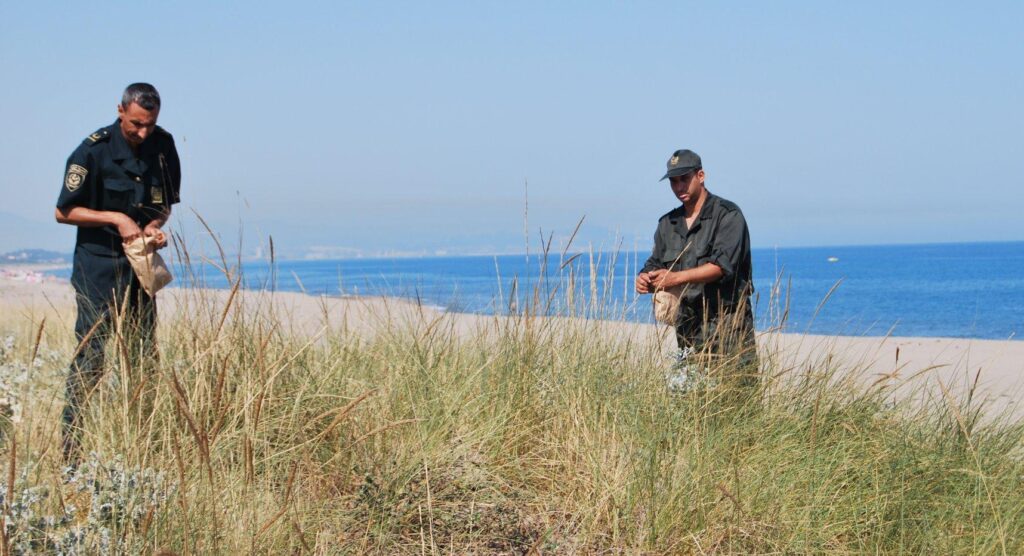
Members of the Forest Conservation of the Wilaya of Jijel during a marram grass seed collection operation at a beach.
© Nadjib Benayad, Forest Conservation of the Wilaya of Jijel / Association Écologie Sans Frontière
Marram grass seed germination tests at the INRF-Jijel laboratory
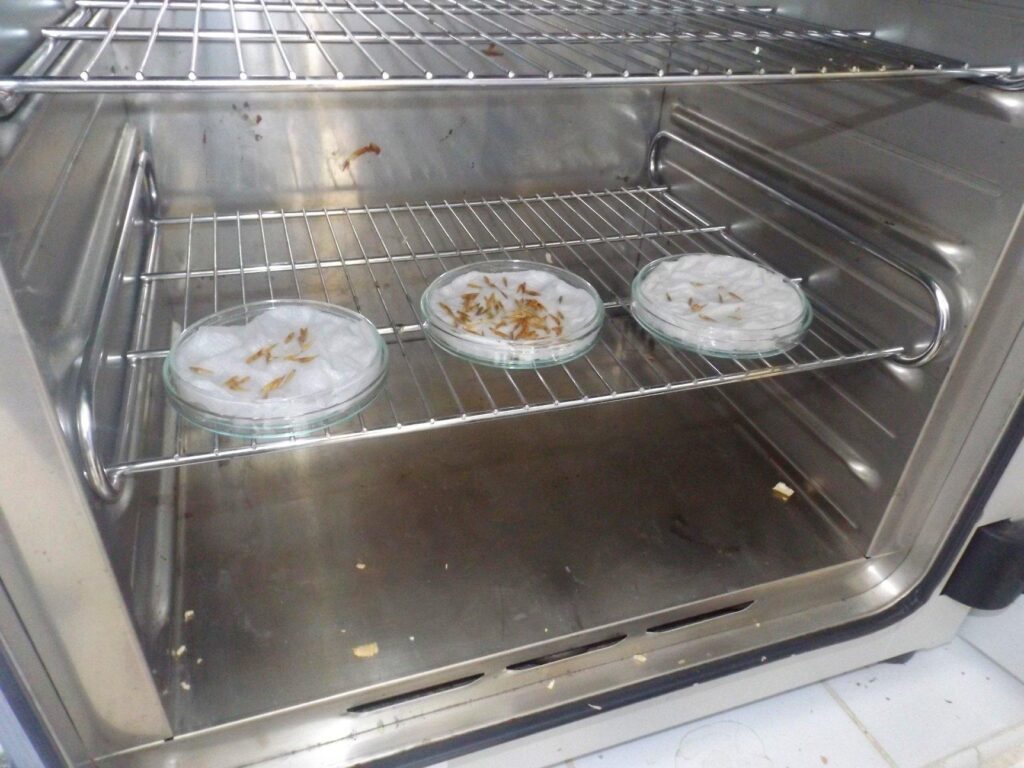
This operation is part of the second phase (biological fixation) of the pilot project for coastal dune fixation at the Béni-Belaid Nature Reserve.
© Nadjib Benayad, Association Écologie Sans Frontière
Marram grass multiplication tests in nursery
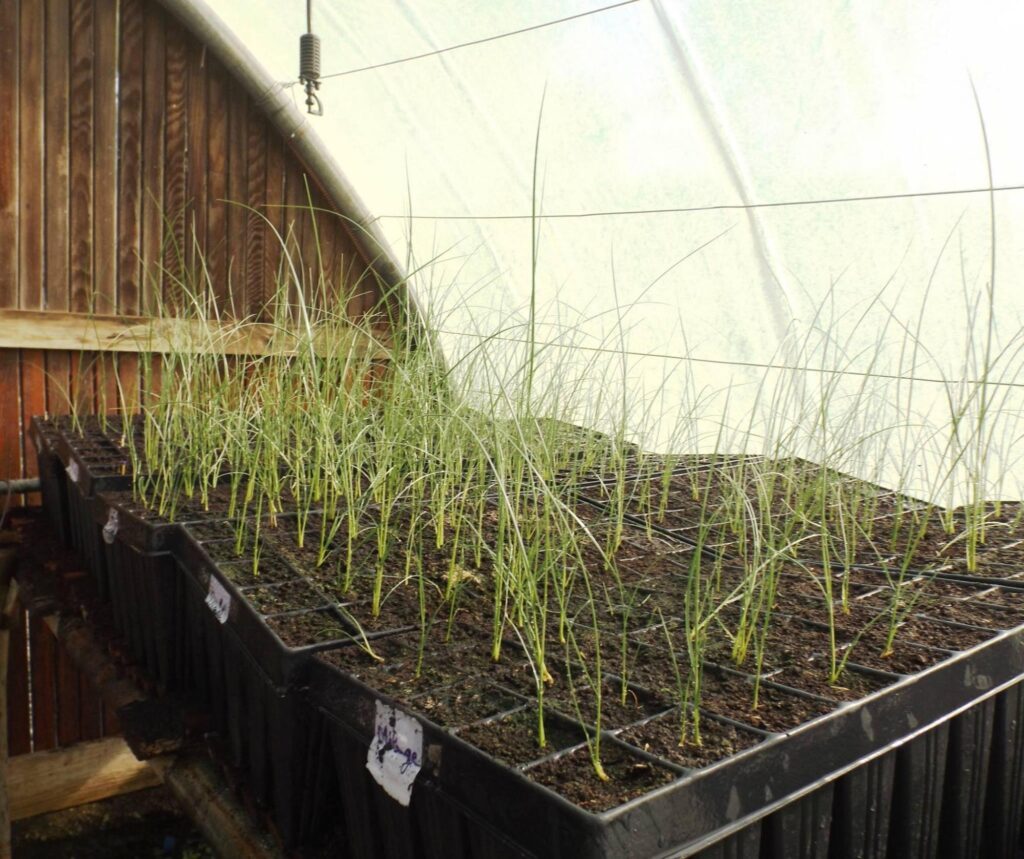
The first successful experience in Algeria of multiplying marram grass (Ammophila arenaria) in a nursery, with a success rate of over 80%.
© Nadjib Benayad, Association Écologie Sans Frontière
Planting operation of marram grass (Ammophila arenaria) at the coastal zone of the Béni-Belaid Nature Reserve
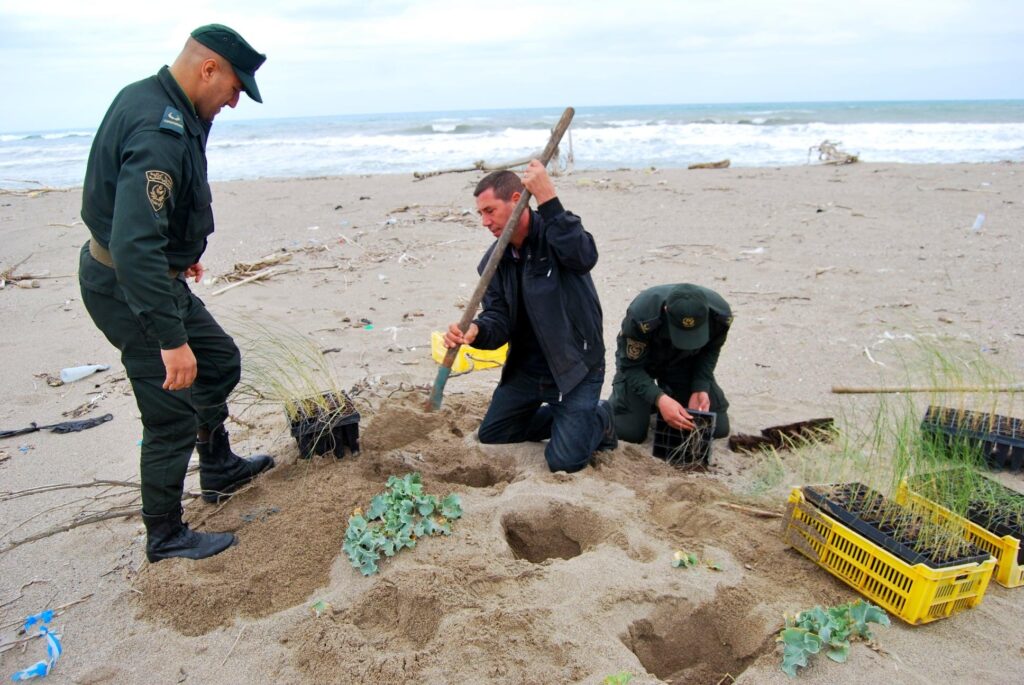
After the nursery multiplication of marram grass, this plant was transported and used for planting on the coastal dunes of the Béni-Belaid Nature Reserve for fixation purposes.
© Nadjib Benayad, Association Écologie Sans Frontière
Outcome of mechanical dune fixation after ganivelle installation
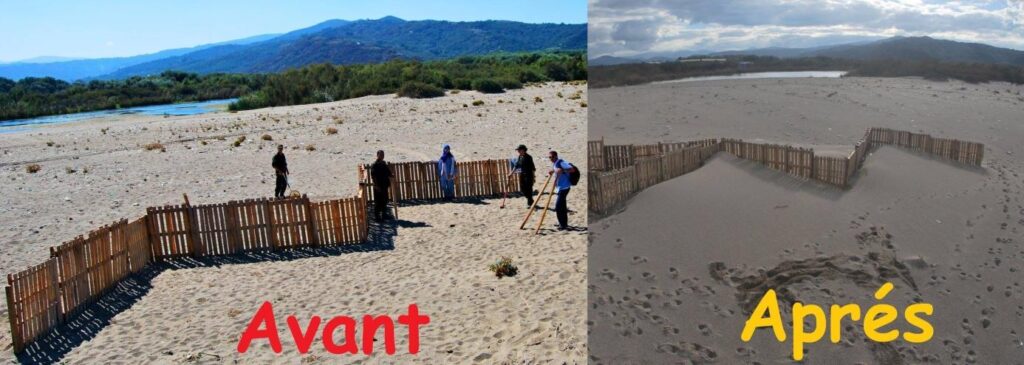
This structure clearly demonstrates its effectiveness in trapping windblown sand and forming an artificial dune at the project site.
© Nadjib Benayad, Forest Conservation of the Wilaya of Jijel / Association Écologie Sans Frontière
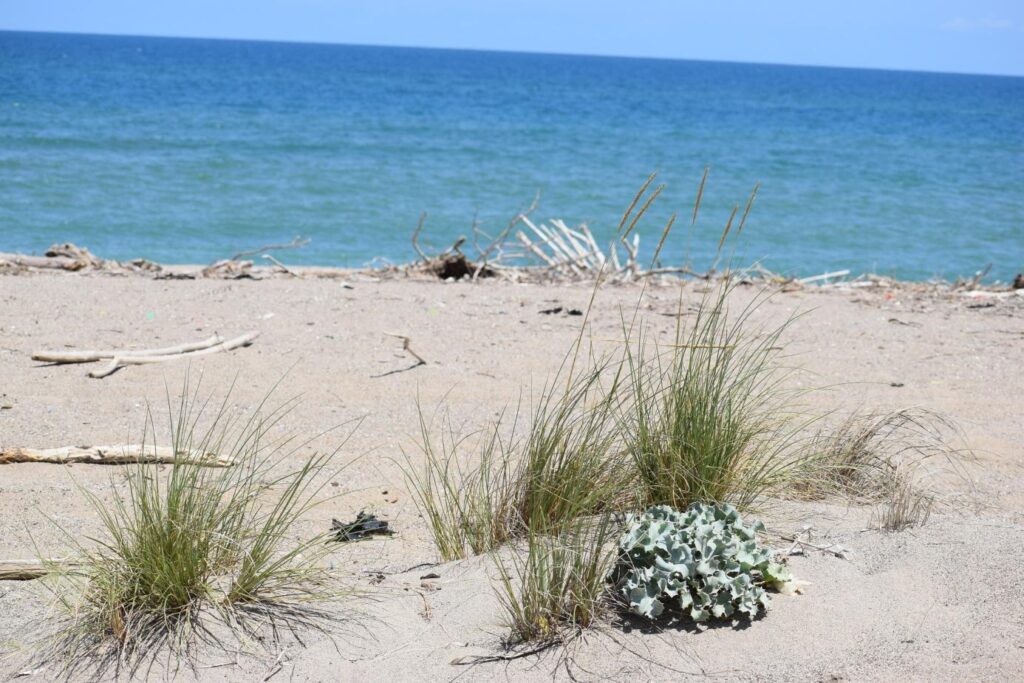
Outcome of biological dune fixation after marram grass planting
2020
© Nadjib Benayad, Association Écologie Sans Frontière
© Nadjib Benayad, Association Écologie Sans Frontière
2023
© Nadjib Benayad, Association Écologie Sans Frontière
2024
© Nadjib Benayad, Association Écologie Sans Frontière